Command of the case, from first entry to handoff.
Investigation Command is where the senior investigating officer runs the case. Multi-entity intake, planning, actions, the war room, timelines, findings and supervisory control sit in one governed workflow, so the investigative picture is built once and carried forward rather than reassembled from scattered systems.
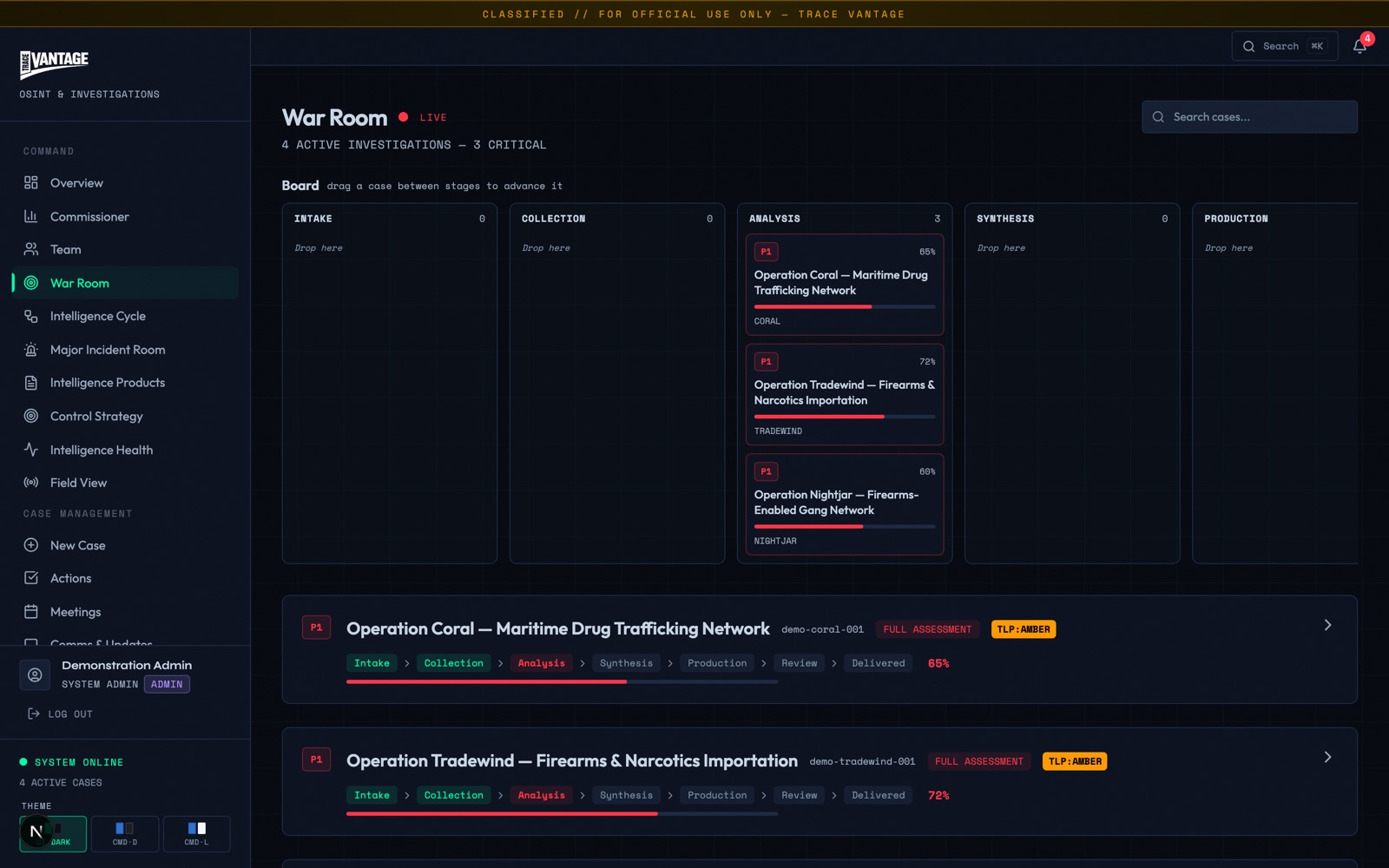
One authoritative case picture, not a dozen.
Complex investigations fragment across spreadsheets, mailboxes, drives and disconnected tools. Provenance is reconstructed under pressure and the SIO spends time assembling the picture rather than directing it. Investigation Command keeps intake, planning, tasking and findings in a single governed environment where every entry is attributed and every decision recorded.
Attributed by default
Every action, update and finding carries who did it, when and on what authority, so the audit trail is a by-product of the work rather than a later reconstruction.
Built once, carried forward
Entities, exhibits and assessments established at intake flow through planning, analysis and disclosure without re-keying, preserving provenance at each stage.
Governed throughout
Handling controls, retention and lawful basis travel with the material, and the workflow is designed to support inspection readiness.
Eight stages under one governed roof.
The stages below map to how a case is actually run. Each one records the decisions that matter and hands a clean, attributed picture to the next.
01 · Multi-entity case intake
Open a case and register people, organisations, vehicles, locations, accounts and exhibits as structured entities. Intake material can be promoted into governed evidence and disclosure workflows as the case develops.
02 · Case planning
Set objectives, hypotheses, lines of enquiry and lawful basis. The plan is a living record the SIO can revise, with each change attributed and timestamped.
03 · Actions and tasking
Raise, allocate and track actions against officers and teams, with priority, status and outcome held against the case rather than in a separate list.
04 · War room
A shared operational view of the live case: open actions, latest findings, key entities and decisions, so command and the team work from the same current picture.
05 · Timelines
Assemble the sequence of events from intake material and analysis into a single reviewable chronology that updates as new material lands. Requires approved data source
06 · Findings
Capture assessments and conclusions against their supporting material, with confidence and source recorded, ready to be considered for the evidential record.
07 · Supervisory control
Review, endorsement and authorisation sit in the workflow, so a supervisor can see what was decided, by whom and on what basis before it progresses.
08 · Delivery and handoff
Package the case picture for onward teams, prosecutors or partner agencies, with material promotable into governed evidence, disclosure and court-bundle workflows.
The SIO sees the whole case, and who decided what.
Direct from the top
The SIO sets objectives and priorities and sees them reflected in live tasking, without waiting for a separate status report to be compiled.
Oversight in the flow
Supervisory review is part of the workflow, not a parallel exercise, so endorsement and authorisation are recorded against the material they concern.
Nothing lost at the seams
Because command, tasking and findings share one governed record, the case picture does not degrade as it moves between people and stages.
Ready for scrutiny
The record of who authorised what, on what basis, is designed to support inspection readiness and later review.
What Investigation Command is designed to deliver.
Faster case build
Structured intake and a carried-forward picture mean less time assembling the case and more time directing it, so command effort goes to decisions rather than collation.
Supervisory oversight
Review, endorsement and authorisation are captured in the workflow, giving supervisors a clear, attributed view of what was decided and on what basis.
Disclosure-ready handoff
Case material can be promoted into governed evidence and disclosure workflows, so the handoff to prosecutors and partners is orderly and the audit trail travels with it.
See Investigation Command against your own operating context.
Walk the command workflow, intake, planning, tasking, the war room and handoff, with your own casework and governance in mind.